Application Process and Required Technologies of Autonomous CNC Systems
Author: Radonix R&D Team
Autonomous CNC systems represent the evolution of conventional CNC architecture into data-driven, connected, and adaptive manufacturing platforms. Unlike traditional machines that rely primarily on programmed instructions, autonomous systems combine motion control, sensor feedback, artificial intelligence, and real-time communication to optimize performance continuously.
For industrial manufacturers and machine builders, successful implementation requires more than installing new hardware. It demands structured planning, infrastructure readiness, and integration of multiple enabling technologies.
This guide outlines the practical application process and the core technologies required to deploy autonomous CNC systems effectively.

1. Application Process: Integrating Autonomous CNC Systems
a. Infrastructure Assessment and Preparation
The first phase of deploying autonomous CNC systems is evaluating the existing production environment.
Key assessment areas include:
- Compatibility of existing CNC hardware and drives
- Control system upgrade requirements
- Network readiness and data bandwidth capacity
- Power stability and environmental conditions
Older machines may require controller upgrades or additional I/O modules to support autonomous features. In some cases, retrofitting with modern control boards and industrial communication interfaces is sufficient.
Establishing an IoT-ready infrastructure is essential. Machines must be able to exchange data reliably with supervisory systems. This stage often includes:
- Installation of industrial Ethernet networks
- Integration of communication gateways
- Deployment of distributed I/O modules
Sensor integration is also implemented during this phase. Temperature, vibration, load, and spindle condition sensors are installed to provide continuous operational insight.
b. Artificial Intelligence and Machine Learning Implementation
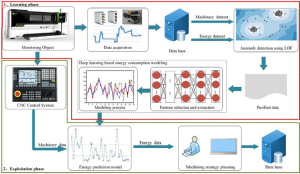
Artificial intelligence (AI) and machine learning (ML) enhance the adaptive capabilities of autonomous CNC systems.
These technologies enable:
- Historical production data analysis
- Parameter optimization for improved cycle stability
- Pattern recognition in machine behavior
- Adaptive feed and speed adjustments within safe operational limits
Machine learning algorithms analyze performance data over time, identifying optimal cutting conditions for complex geometries and varying materials. This improves consistency and reduces manual intervention.
c. Real-Time Monitoring and Condition Detection
Continuous monitoring is fundamental to autonomous operation.
Sensor networks collect real-time data on:
- Spindle temperature
- Vibration levels
- Axis load conditions
- Motor current draw
- Tool wear indicators
This data is transmitted through industrial communication networks to centralized monitoring systems.
AI-based analysis detects abnormal patterns and supports predictive maintenance scheduling. Early identification of anomalies reduces unexpected downtime and extends machine life.


2. Essential Technologies for Autonomous CNC Systems
a. IoT and Connected Devices
IoT technology enables data exchange between machines, control systems, and supervisory platforms.
Critical IoT components include:
- Smart sensors for environmental and operational monitoring
- Secure industrial Ethernet networks
- Data aggregation gateways
- Real-time communication protocols
Reliable connectivity ensures synchronized production data across multiple machines.
b. Artificial Intelligence and Machine Learning
AI/ML technologies provide analytical intelligence within autonomous CNC systems.
Applications include:
- Optimization of machining routes
- Energy efficiency improvements
- Tool wear prediction
- Adaptive motion control adjustments
Rather than replacing operators, AI supports decision-making by providing data-driven insights.
c. Sensors and Data Collection Systems
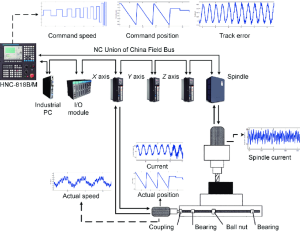
Sensors serve as the primary feedback layer of autonomous CNC systems.
Common sensor types include:
- Vibration sensors for detecting imbalance or tool instability
- Temperature sensors for monitoring spindle and bearing health
- Load sensors for analyzing cutting force behavior
- Optical or tactile measurement systems for dimensional inspection
Accurate data collection ensures safe and predictable autonomous performance.
d. Cloud Computing and Data Infrastructure
Cloud platforms enable centralized storage, analytics, and remote accessibility.
Key benefits include:
- Secure remote access to machine data
- Aggregated performance dashboards
- Scalable storage for production history
- Cross-facility performance comparison
Cloud-enabled systems support strategic production planning and long-term optimization.
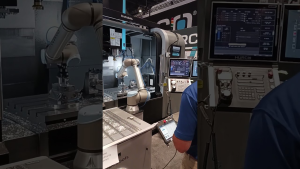
e. Robotics and Automated Material Handling
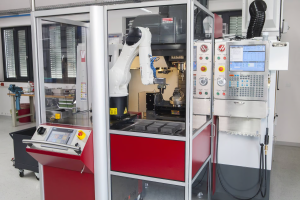
Autonomous CNC systems are often integrated with robotic loading and unloading solutions.
Automation technologies contribute to:
- Continuous production flow
- Reduced manual handling
- Improved repeatability in part positioning
- Enhanced safety in high-speed machining environments
Coordinated signal exchange between CNC controllers and robotic systems ensures synchronized operation.
3. Industrial Integration Scenarios
a. Flexible Manufacturing Systems (FMS)
Autonomous CNC machines integrated within FMS environments allow rapid transitions between product types.
Capabilities include:
- Automatic program selection
- Tool management automation
- Centralized data analysis
- Dynamic job scheduling
This flexibility is critical for manufacturers handling variable production demands.
b. Quality Control Integration
Autonomous CNC systems support integrated quality monitoring.
Real-time inspection technologies may include:
- Optical measurement systems
- In-process probing
- Surface analysis sensors
Immediate defect detection reduces scrap rates and supports consistent production standards.
c. Predictive Maintenance Frameworks
Predictive maintenance relies on continuous condition monitoring.
Data-driven insights enable:
- Forecasting of component lifespan
- Scheduled maintenance planning
- Reduced unplanned downtime
- Improved overall equipment effectiveness (OEE)
Autonomous CNC systems transform maintenance from reactive to proactive operations.
Strategic Considerations for Implementation
Successful adoption of autonomous CNC systems requires structured planning across:
- Control system architecture
- Network security and reliability
- Data management policies
- Operator training
- Gradual phased deployment
Machine builders and industrial manufacturers must ensure that motion control hardware, communication systems, and analytical software operate cohesively.
Conclusion
Autonomous CNC systems combine advanced motion control, IoT connectivity, AI-driven analytics, and robotic integration to enhance manufacturing performance.
When supported by appropriate infrastructure and intelligent control architecture, these systems improve efficiency, production stability, and long-term reliability.
Radonix develops advanced CNC control solutions designed to support connected and scalable machine platforms. To explore autonomous-ready control systems or discuss integration for your production environment, contact Radonix or use the chatbot in the bottom right corner to connect directly with our technical team.
Contact Us:
- E-Mail: info@radonix.com
- Phone: +90 (553) 920 5500