Author: Radonix R&D Team – CNC Control Systems & Industrial Automation
CNC controllers are not just control units—they are the decision-making core behind every machining operation. They translate digital commands into synchronized physical movement, directly impacting accuracy, efficiency, and production stability.
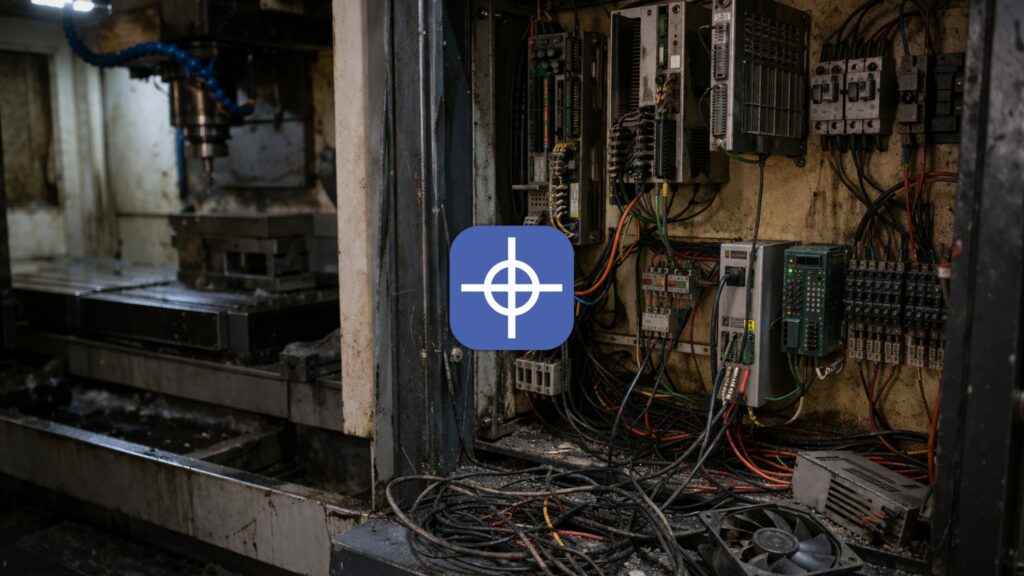
When controller-related issues arise, the consequences go beyond simple downtime. They can affect product quality, increase scrap rates, and disrupt entire production workflows. In real industrial environments, these failures are rarely random—they typically originate from system design limitations, unstable communication layers, environmental interference, or incorrect configuration.
Across multiple CNC applications—whether wood routers, stone cutting machines, or multi-axis metal machining centers—we consistently observe that controller-related failures follow predictable patterns. Understanding these patterns is the key to preventing them.
Modern industrial controllers, such as those developed by Radonix, are specifically designed to eliminate these weaknesses through deterministic control, stable communication, and robust hardware architecture.
1. Communication Breakdown Between System Components
Problem:
Inconsistent or lost communication between the controller and critical components such as drives, I/O systems, or HMIs.
What It Looks Like in Real Machines:
Operators may notice sudden axis stops, delayed responses, or intermittent disconnects—especially in high-speed machining environments.
Why It Happens:
- Inadequate shielding or poor cable quality
- High electromagnetic interference in industrial environments
- Use of non-deterministic or outdated protocols
- Incorrect network topology or configuration
How to Fix It:
- Implement deterministic industrial protocols like EtherCAT
- Apply strict grounding and shielding standards
- Use certified industrial cabling
- Maintain a clean and structured network architecture
A well-designed controller ensures uninterrupted data flow, even in electrically noisy environments.
2. Inconsistent Motion and Surface Quality Issues
Problem:
Machine movement becomes unstable, resulting in poor surface finish and reduced precision.
Real-World Observation:
In wood CNC routers, this often appears as rough edges or vibration marks. In metal machining, it leads to dimensional inaccuracies and poor tolerances.
Why It Happens:
- Lack of real-time processing capability
- Weak motion planning algorithms
- Improper servo or motor tuning
- Delayed communication between components
How to Fix It:
- Use controllers with true real-time processing capability
- Optimize motion and acceleration profiles based on the application
- Perform accurate servo tuning
- Ensure synchronized multi-axis communication
Stable motion control is essential for maintaining machining consistency and product quality.
3. Position Drift and Accuracy Deviation
Problem:
The machine fails to maintain exact positioning during operations.
What Operators Notice:
Parts gradually go out of tolerance, repeated jobs produce inconsistent results, or zero position shifts over time.
Why It Happens:
- Open-loop control systems without feedback
- Signal noise affecting encoder readings
- Mechanical backlash or wear
- Electrical disturbances
How to Fix It:
- Switch to closed-loop systems with feedback
- Validate encoder signals regularly
- Reduce mechanical play through maintenance
- Improve signal integrity and shielding
Accurate positioning is critical for repeatability, especially in high-precision machining environments.
4. System Freezes and Unexpected Interruptions
Problem:
Controller becomes unresponsive during operation.
Real Scenario:
This is commonly seen in PC-based control systems where background processes interfere with real-time machining tasks.
Why It Happens:
- Overloaded processing units
- Instability in PC-based control setups
- Firmware inconsistencies
- Thermal stress due to poor cooling
How to Fix It:
- Use dedicated industrial CNC controllers instead of general-purpose PCs
- Ensure proper ventilation and cooling systems
- Keep firmware stable and validated
- Eliminate unnecessary background processes
Reliable controllers are designed for continuous operation without interruption.
5. Electrical Noise Disrupting Machine Behavior
Problem:
Unexpected stops, false triggers, or communication errors.
Real-World Case:
In stone CNC environments with high-power spindles, improper grounding can introduce noise that disrupts encoder signals and communication lines.
Why It Happens:
- Poor grounding practices
- Improper separation of signal and power lines
- Nearby high-voltage equipment
How to Fix It:
- Apply strict grounding and shielding methods
- Separate high-power and signal wiring
- Use industrial-grade electronic components
Noise-resistant system design is essential in industrial environments.
6. I/O Instability and Signal Errors
Problem:
Sensors and input/output signals behave inconsistently.
What It Looks Like:
Limit switches triggering randomly, sensors failing intermittently, or delayed machine responses.
Why It Happens:
- Faulty wiring or loose connections
- Component degradation
- Voltage mismatches
- External interference
How to Fix It:
- Verify all wiring and signal integrity
- Replace damaged components
- Use isolated input systems
- Conduct regular diagnostics
Reliable I/O handling ensures seamless machine interaction.
7. Thermal Stress and Overheating
Problem:
Controller performance drops or shuts down due to heat buildup.
Real Scenario:
Machines operating continuously in enclosed cabinets without proper airflow often experience random shutdowns or degraded performance.
Why It Happens:
- Inadequate enclosure design
- Poor airflow or ventilation
- Continuous heavy-duty operation
How to Fix It:
- Implement proper cooling strategies
- Monitor operating temperatures
- Use hardware designed for industrial loads
Thermal stability is essential for long-term reliability.
8. Configuration Mistakes and Setup Errors
Problem:
Unexpected machine behavior due to incorrect setup.
Real-World Observation:
Incorrect motion parameters or mismatched G-code can cause sudden axis movements or incorrect tool paths.
Why It Happens:
- Incorrect motion parameters
- Misconfigured I/O mapping
- Incompatible or poorly written G-code
How to Fix It:
- Validate all configuration settings before operation
- Use tested parameter templates
- Train operators thoroughly
- Maintain proper documentation
Clear configuration workflows reduce operational errors significantly.
Why Controller Reliability Matters
Controller performance directly impacts:
- Machining accuracy
- Product consistency
- Production efficiency
- Maintenance costs
Even minor instabilities can lead to major production inefficiencies if not addressed early.
How to Diagnose CNC Controller Issues Faster
In real production environments, identifying whether the issue is controller-related or mechanical is critical.
Key indicators of controller-related problems include:
- Intermittent faults without a mechanical cause
- Errors linked to communication or synchronization
- Repeatable issues across different jobs
A structured diagnostic approach significantly reduces downtime and prevents unnecessary part replacements.
Best Practices to Avoid Failures
- Use industrial-grade CNC control systems
- Ensure proper installation and wiring standards
- Perform routine preventive maintenance
- Monitor system performance continuously
- Invest in operator training and documentation
Preventive design and correct setup play a major role in long-term system stability.
Conclusion
CNC controller failures are typically the result of identifiable system weaknesses rather than random events. By understanding real-world failure patterns and applying the right solutions, manufacturers can significantly reduce downtime, improve precision, and maintain consistent production output.
About Radonix
Radonix develops industrial CNC controllers built for precision, reliability, and seamless integration. With real-time motion control, deterministic communication, and robust system architecture, Radonix solutions are designed to perform reliably in demanding industrial environments.