Capabilities of CNC Machines for Jewelry Production
The jewelry manufacturing industry is one of the fields in which precision, delicacy, repeatability, and surface quality are extremely important. In the past, a large portion of the jewelry manufacturing process was performed manually and relied on the skills of master craftsmen. Today, however, with the introduction of CNC machines designed for gold, silver, brass, wax, resin, and other machinable materials, it has become possible to produce complex, precise, and completely repeatable designs.
A CNC machine for jewelry production is essentially a computer numerical control machine that receives a design file and precisely controls the movement path of the cutting tool to perform operations such as cutting, engraving, carving, drilling, shaping, or modeling on the workpiece. These machines can be used in goldsmith workshops, silversmith workshops, costume jewelry production, mold making, wax model production, and the manufacturing of nameplates, rings, bracelets, pendants, medals, gemstone settings, and even very delicate decorative components.
What Is a Jewelry CNC Machine?
A jewelry CNC machine is a type of precision machine designed for machining small, delicate, and valuable parts. Unlike heavy industrial CNC machines that are used for large metal, wood, or stone parts, jewelry CNC machines usually have smaller dimensions, higher precision, higher‑speed spindles, and smoother motion control.
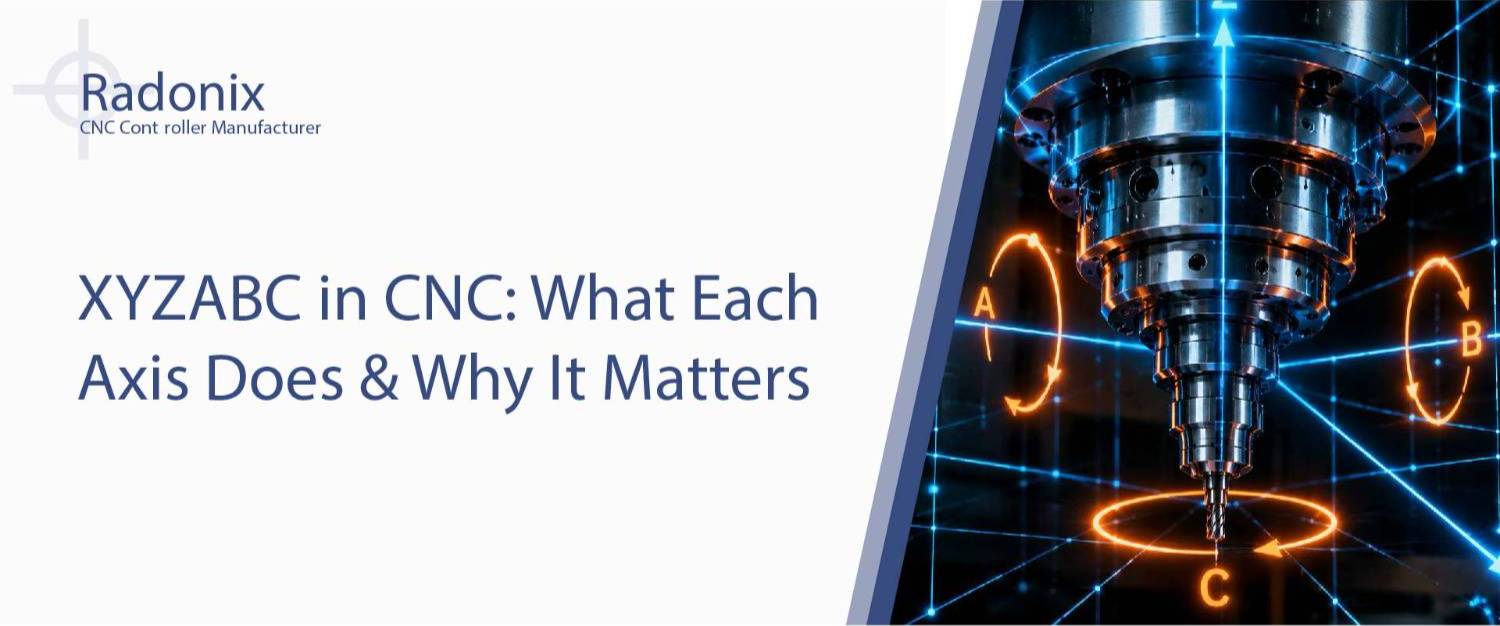
These machines are typically produced in three‑axis, four‑axis, and five‑axis models. In three‑axis models, the tool moves along the X, Y, and Z axes. In four‑axis models, the workpiece can also rotate, which is very useful for producing rings, bangles, decorative beads, and cylindrical components. In five‑axis machines, the freedom of movement increases, allowing machining of more complex surfaces and difficult angles.
The Most Important Capabilities of CNC Machines for Jewelry Production
1. Very High Machining Precision
One of the main advantages of jewelry CNC machines is the high precision in executing designs. In jewelry manufacturing, even a difference of a few hundredths of a millimeter can affect the appearance, weight, stone placement, connection quality, and final value of the product. By precisely controlling the axes, CNC machines enable the execution of extremely fine details.
This high precision is particularly important for the following:
- Production of gemstone settings and prongs
- Precise machining of rings and bands
- Engraving small inscriptions
- Creating delicate patterns on gold or silver surfaces
- Manufacturing symmetrical and repeatable components
- Producing precise models for casting
2. Ability to Produce Complex Designs
Using CNC machines, designs can be produced that would be extremely time‑consuming, difficult, or even impossible to create manually. Arabesque patterns, geometric forms, three‑dimensional shapes, raised or recessed features, lattice structures, and combined designs can all be executed with high precision on the workpiece.
In CAD/CAM software, the designer can create a three‑dimensional jewelry model and then prepare the toolpath for machining. This toolpath is executed by the CNC controller, and the final result will closely match the original design model with high accuracy.
3. Engraving Text, Logos, and Custom Designs
One of the important applications of CNC machines in jewelry is precise engraving of text and logos. This capability is extremely valuable for producing customized products, promotional gifts, nameplates, medals, wedding rings, personalized bracelets, and branded products.
The machine can engrave various types of text on the inner or outer surface of a part, such as:
- Name and date
- Brand logo
- Serial number
- Religious or symbolic designs
- Short texts on rings, plates, or medals
- Signature or a customer’s custom design
4. Production of Wax Models for Casting
One of the most common applications of CNC machines in the jewelry industry is carving wax models. In this method, the jewelry design is first created in software, and then the CNC machine precisely machines a wax model of the design. The wax model is then used in the casting process.
Advantages of using CNC for wax models include:
- Reduction of human error
- Fast production of the initial model
- Ability to modify the design before final production
- Suitable for mass or semi‑mass production
- Execution of very fine details
- Reduction of prototyping costs
5. Direct Machining on Gold, Silver, and Precious Metals
Some jewelry CNC machines are capable of directly machining precious metals such as gold, silver, platinum, brass, and copper. This capability is useful for producing special parts, engraving, shape correction, creating surface textures, and manufacturing precise components.
When machining precious metals, accurate chip control is very important because even small amounts of gold or silver chips have monetary value. For this reason, jewelry CNC machines often include chip collection systems, enclosed working chambers, suitable suction systems, or specially designed worktables.
6. Ability to Work with a Fourth Axis for Rings and Round Parts
The fourth axis is one of the most important features in jewelry CNC machines. With the fourth axis, the workpiece rotates around a single axis while the tool performs machining operations around its circumference. This capability is highly useful for producing and engraving parts such as rings, bangles, beads, bracelets, and cylindrical components.
With a fourth axis, the following operations can be performed:
- Engraving around the entire circumference of a ring
- Machining the outer surface of a ring band
- Engraving inside a ring in certain designs
- Creating uniform grooves
- Executing continuous patterns around the part
- Producing completely symmetrical components
7. High Surface Quality
In jewelry manufacturing, the final surface quality is extremely important. The surface of the piece must be smooth, clean, uniform, and free from tool vibration marks. Jewelry CNC machines can produce high‑quality surfaces due to high‑speed spindles, precise ball screws, high‑quality linear guides, and smooth motion control.
However, the final surface quality depends on several factors, including:
- Tool type
- Spindle speed
- Feed rate
- Material type
- Machining strategy
- Machine rigidity
- Controller accuracy
- CAM quality and toolpath
8. Repeatability in Production
One of the problems with manual jewelry production is the slight variation between different pieces. In batch production, customers expect all pieces to be identical in dimensions, design, weight, and quality. By executing the program precisely, CNC machines allow the production of completely repeatable parts.
This feature is extremely important for manufacturers who receive large orders. For example, if a particular model of pendant, ring, or medal needs to be produced in large quantities, a CNC machine can produce each piece with exactly the same specifications.
9. Reduced Dependence on Manual Skills
The skills of master craftsmen are still highly valuable in the jewelry industry. However, CNC machines allow many repetitive, time‑consuming, and sensitive tasks to be performed by machines. This reduces human error, increases production speed, and allows skilled personnel to focus more on design, finishing, and quality control.
In other words, CNC machines do not completely replace the art of jewelry making; rather, they serve as powerful tools for increasing precision, speed, and production diversity.
10. Rapid Prototyping Capability
In the jewelry market, the speed of introducing new designs is extremely important. A manufacturer who can create prototypes faster, receive market feedback sooner, and produce successful models more quickly will have a greater competitive advantage.
With CNC machines, a new design can first be created in software, then a prototype can be produced from wax, resin, aluminum, brass, or other materials. After evaluation, necessary modifications can be made. This process significantly reduces product development time.
Applications of CNC Machines in the Jewelry Industry
Jewelry CNC machines have a wide range of applications and are not limited to machining gold or silver. Some of the most important applications include:
Ring Production
CNC machines can be used to produce ring prototypes, engrave designs on ring bands, machine inner and outer surfaces, create raised or recessed patterns, and prepare stone‑setting areas.
Pendant and Plate Production
Nameplates, religious plates, medals, decorative pendants, and custom designs are among the most common products produced using CNC machines. The machine can execute text, patterns, logos, and three‑dimensional designs with high precision.
Mold Manufacturing
In some processes, CNC machines are used to manufacture metal or resin molds. These molds may be used for pressing, casting, injection processes, or serial production of decorative components.
Engraving on Precious Metals
Engraving names, logos, serial numbers, decorative patterns, and surface textures on gold, silver, platinum, and brass is one of the important applications of this machine.
Wax Model Production
In the precision casting process, CNC machines can produce high‑quality wax models that are then used to create casting molds.
Production of Custom Components
Today, personalized orders are very popular in the jewelry market. CNC machines make it possible to produce custom designs for customers with high speed and precision.
Key Components of a Jewelry CNC Machine
CNC Controller
The CNC controller is the main brain of the machine. It is responsible for executing motion programs, controlling axes, managing the spindle, handling inputs and outputs, and coordinating all machine components. The quality of the controller plays a major role in motion smoothness, path accuracy, and the machine’s software capabilities.
Spindle
The spindle is responsible for rotating the cutting tool. In jewelry CNC machines, high‑speed spindles are commonly used because the tools are very delicate and require high rotational speed for clean cutting.
Motion Axes
The axes include X, Y, and Z, and in some machines a fourth or fifth axis. The mechanical accuracy of the axes directly affects the final quality of the workpiece.
Workpiece Holding System
In jewelry manufacturing, workpieces are small and sometimes irregular in shape. Therefore, fixturing and holding systems are very important. For rings and cylindrical parts, a rotary axis or precision chuck is often used.
CAD/CAM Software
To produce a part using CNC, the model is first designed in CAD software and then the toolpath is prepared in CAM software. Specialized jewelry design software enables precise design of rings, gemstones, prongs, textures, and delicate decorations.
Advantages of Using CNC in Jewelry Production
Using CNC machines in jewelry production workshops offers numerous advantages:
- Increased production accuracy
- Reduced human error
- Faster prototyping
- Ability to produce complex designs
- Reduced dependence on fully manual methods
- Increased repeatability in batch production
- Ability to customize products
- Reduced waste when the process is properly configured
- Improved surface quality and fine details
- Ability to produce precise three‑dimensional models
- Better time management in workshops
- Increased competitiveness for manufacturers
Features of a Suitable CNC Machine for Jewelry Production
To choose a suitable CNC machine for jewelry manufacturing, several important features should be considered.
High Mechanical Precision
The machine must have precise mechanics, smooth motion, and minimal backlash. The use of appropriate linear guides, precision ball screws, and a stable machine frame is very important in this regard.
High‑Speed Spindle
For delicate tools, a high‑speed spindle is essential. Higher spindle speeds enable cleaner cutting, reduce stress on the tool, and improve surface quality.
Accurate and Stable Controller
The controller must be capable of executing delicate and complex toolpaths smoothly and accurately. Multi‑axis control capability, speed adjustment, G‑code support, and compatibility with CAM software are important controller features.
Accurate Fourth Axis
If the goal is to produce rings, bangles, or cylindrical components, the presence of a precise fourth axis is a very significant advantage.
Enclosed Chamber and Chip Collection
For machining gold and silver, an enclosed chamber and chip collection system are extremely important. This is important both for safety and for economic reasons.
User‑Friendly Software
The machine software should be easy for operators to understand and should provide functions such as zero setting, manual axis control, file execution, emergency stop, speed adjustment, tool management, and toolpath visualization.
Materials Used in Jewelry CNC Machines
Depending on the machine type, spindle power, tooling, and mechanical design, jewelry CNC machines can work on various materials, including:
- Gold
- Silver
- Platinum
- Brass
- Copper
- Aluminum
- Jewelry wax
- Machinable resin
- Graphite
- Certain engineering plastics
- Decorative fine woods
- Shell or other decorative materials, if compatible with the tooling and machining process
The Role of Software in Production Quality
In jewelry CNC machining, software plays a very important role. Jewelry designs are usually created in 3D design software, and then the toolpath is generated using CAM software. CAM settings such as tool type, cutting depth, feed rate, roughing and finishing strategies, path overlap, and operation sequence directly affect the final quality.
A well‑designed toolpath can reduce production time, improve surface quality, and reduce the risk of tool breakage. In contrast, a poor toolpath can cause part failure, increased waste, and damage to the tool.
Conclusion
CNC machines for jewelry production are among the most important modern technologies in the gold, silver, and costume jewelry industries. With capabilities such as high precision, the ability to produce complex designs, delicate engraving, wax model production, direct machining of precious metals, use of a fourth axis, and repeatable production, these machines can significantly increase production quality and speed.
Proper use of CNC machines enables manufacturers to produce more diverse, more precise, and more customized products and gain a better position in the competitive jewelry market. However, achieving optimal results requires selecting the right machine, using appropriate software, training operators, choosing suitable tools, and following proper machining principles.
Ultimately, CNC is not only a production machine but also a powerful tool for transforming creative ideas into precise, beautiful, and marketable products in the jewelry industry.