
PC-Based Controllers for CNC: Flexibility and Power for Precision Machining
PC‑based controllers are reshaping precision machining by blending the openness of a standard computer with the rigor of industrial motion control.
Instead of relying solely on closed, standalone hardware, manufacturers use a PC as the command center—pairing high‑performance CPUs/GPUs with real‑time motion cards, servo drives, and purpose‑built CNC software.
The outcome is a platform that’s easier to customize, faster to upgrade, and better aligned with digital‑first manufacturing.
What Makes a PC‑Based CNC Controller Different?
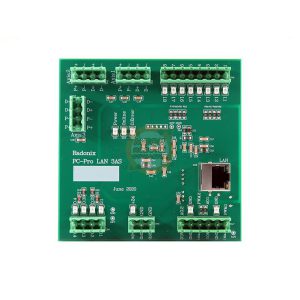
At the core, a PC‑based controller turns a reliable industrial computer into the brain of your machine tool. The PC runs the HMI, path planning, and analytics, while a dedicated motion controller (PCIe/EtherCAT/USB) executes deterministic moves at microsecond cycles.
Typical architecture:
- Industrial PC (IPC): Runs OS, CNC software, visualization, data logging, and edge analytics.
- Motion Interface: Real‑time card/gateway (EtherCAT, SERCOS, CANopen) that translates trajectories into precise axis commands.
- Servo System: Drives and motors for multi‑axis interpolation (X/Y/Z + rotary A/B/C).
- I/O & Safety: Digital/analog I/O, E‑stop, interlocks, light curtains, door switches.
- Connectivity: OPC UA/MQTT/REST for MES/ERP/SCADA; USB/Ethernet for peripherals.
This separation of concerns—rich computing on the PC and deterministic motion on the card—delivers both flexibility and precision.
Why PC‑Based Controllers Matter Now
Manufacturers need platforms that evolve as quickly as their product mix. PC‑based CNC solutions keep pace with:
- Complex geometries and 5‑axis strategies that demand heavy toolpath computation.
- Shorter product cycles that require frequent program changes and quick setups.
- Data‑driven operations (OEE, energy, quality) needing live telemetry and analytics.
- Integration with digital tools—CAD/CAM, PLM, digital twins, and enterprise systems.
Key Advantages of PC‑Based Controllers
1) Harnessing the Power of a PC
Modern CPUs (and optional GPUs) accelerate CAM post‑processing, adaptive roughing strategies, and real‑time simulation. Faster math = smoother surfaces, shorter cycle times, and better finishes on exotic materials.
2) Specialized Software & Hardware Interfaces
The “heart” is software: conversational programming, macro support, tool libraries, advanced look‑ahead, jerk‑limited S‑curves, and high‑speed machining modes. Interface cards provide deterministic motion and tight servo loops—for micron‑level accuracy at industrial speeds.
3) Flexibility and Customization
Unlike fixed controllers, PC‑based systems let you tailor the experience:
- Custom HMIs: Role‑based dashboards for operators, programmers, and maintenance.
- Sector‑specific workflows: Mold/die, aerospace, woodworking, stone, or composites.
- Macros & APIs: Automate checks, auto‑probe cycles, or integrate vision/laser sensors.
4) Advanced Monitoring & Data Analysis
Built‑in logging and historian functions track spindle load, vibration, tool wear, surface speed, and energy use. Edge analytics flag anomalies early; dashboards expose bottlenecks so you can act before quality drifts.
5) Balancing Investment & Expertise
Yes—PC‑based controllers expect more digital literacy. But the ROI compounds through faster setups, fewer stoppages, lower scrap, and rapid feature updates without replacing the entire control.
Practical Use Cases by Industry
- Aerospace: 5‑axis impellers, blisks, and titanium parts benefit from long look‑ahead and collision‑safe simulation.
- Automotive: Cylinder heads, gear housings, and fixtures—fast changeovers and centralized recipe control.
- Medical: Micro‑features with tight tolerances; integrated probing verifies every critical dimension.
- Wood/Stone/Composites: Large toolpaths, nested jobs, and dust/slurry‑tolerant sensors with robust I/O.
CAD/CAM, Simulation, and Digital Twins
PC‑based platforms excel at closed‑loop digital workflows:
- Import toolpaths directly, validate with 3D simulation and material removal verification.
- Use digital twins to test fixtures, tool reach, and axis limits before the first cut.
- Stream approved NC code, then compare as‑planned vs. as‑cut data for continuous improvement.
Connectivity: From Cell to Enterprise
Because the HMI runs on a PC, connecting is native—not an afterthought:
- Protocols: OPC UA, MQTT, MTConnect, REST APIs.
- Systems: MES (work orders, genealogy), ERP (scheduling, costing), CMMS (maintenance).
- Dashboards: OEE, scrap, cycle time, and energy KPIs in one place.
Security and Reliability by Design
Industrial PCs are hardened for the shop floor, but cybersecurity still matters:
- Network segmentation between OT and IT with firewalls/DMZs.
- User management with role‑based access and MFA.
- Signed updates and regular patching for OS and CNC software.
- Backups & rollback images for rapid recovery after incidents.
Cost & Total Cost of Ownership (TCO)
PC‑based doesn’t automatically mean “cheap”—it means scalable value:
- CapEx: IPC + motion card + drives/motors + software licenses.
- OpEx: Training, updates, preventive maintenance, and security.
- Savings: Faster programming, higher uptime, fewer scrapped parts, energy insights.
A simple model many shops use: if the control trims 1–3% off cycle time and scrap across the year, it typically pays for itself.
Implementation Roadmap (Low‑Risk, High‑Impact)
- Assessment: Inventory machines, axes, and I/O; define accuracy and throughput targets.
- Pilot Cell: Equip one machine with an IPC + motion card; connect to a small dashboard.
- Standardize: Lock in HMI layouts, probing cycles, and data tags; write SOPs.
- Scale: Roll to more machines; add ERP/MES/CMMS links; train operators by role.
- Optimize: Introduce digital twins, adaptive control, and automated quality gates.
Selection Checklist
- Axis count and interpolation needs (3, 4, 5, or more?)
- Real‑time bus (EtherCAT, SERCOS, PROFINET IRT) and servo compatibility
- Look‑ahead depth, jerk control, high‑speed machining features
- Probing, tool management, and in‑process measurement support
- HMI customization, APIs/macros, and third‑party plugin ecosystem
- Security features, backup/recovery, and patch policy
- Vendor support, training, and upgrade roadmap
Radonix PC‑Based CNC Solutions
With 16+ years of CNC controller design, Radonix delivers PC‑based and hybrid controls that balance openness with industrial reliability. Our systems feature intuitive HMIs, probing and macro libraries, EtherCAT motion, and enterprise‑ready connectivity—ideal for shops scaling from prototype to production.
Contact
📧 info@radonix.com
📞 +90 553 920 5500
Conclusion
PC‑based CNC controllers combine the raw compute of modern PCs with deterministic motion control to deliver flexibility, speed, and precision. They integrate seamlessly with CAD/CAM, analytics, and enterprise systems—future‑proofing your investment and elevating part quality. For manufacturers targeting shorter lead times and smarter operations, PC‑based control is a practical, proven path forward.